Last summer a doctor stayed at my B&B.
She was an exceptional human being — thoughtful, curious, not in any hurry to perform her credentials. We talked over breakfast the way people do when they have nowhere to be. She asked about the garden. I told her about it. She asked about the plants.
At some point — I don't remember exactly when, only that it was unhurried — she said, "I haven't slept properly in twenty years."
This is the kind of thing that, if you say it to most people, gets a sympathetic nod and then a swift conversational pivot. People don't know what to do with twenty years of not sleeping. It's too big. It implies too much.
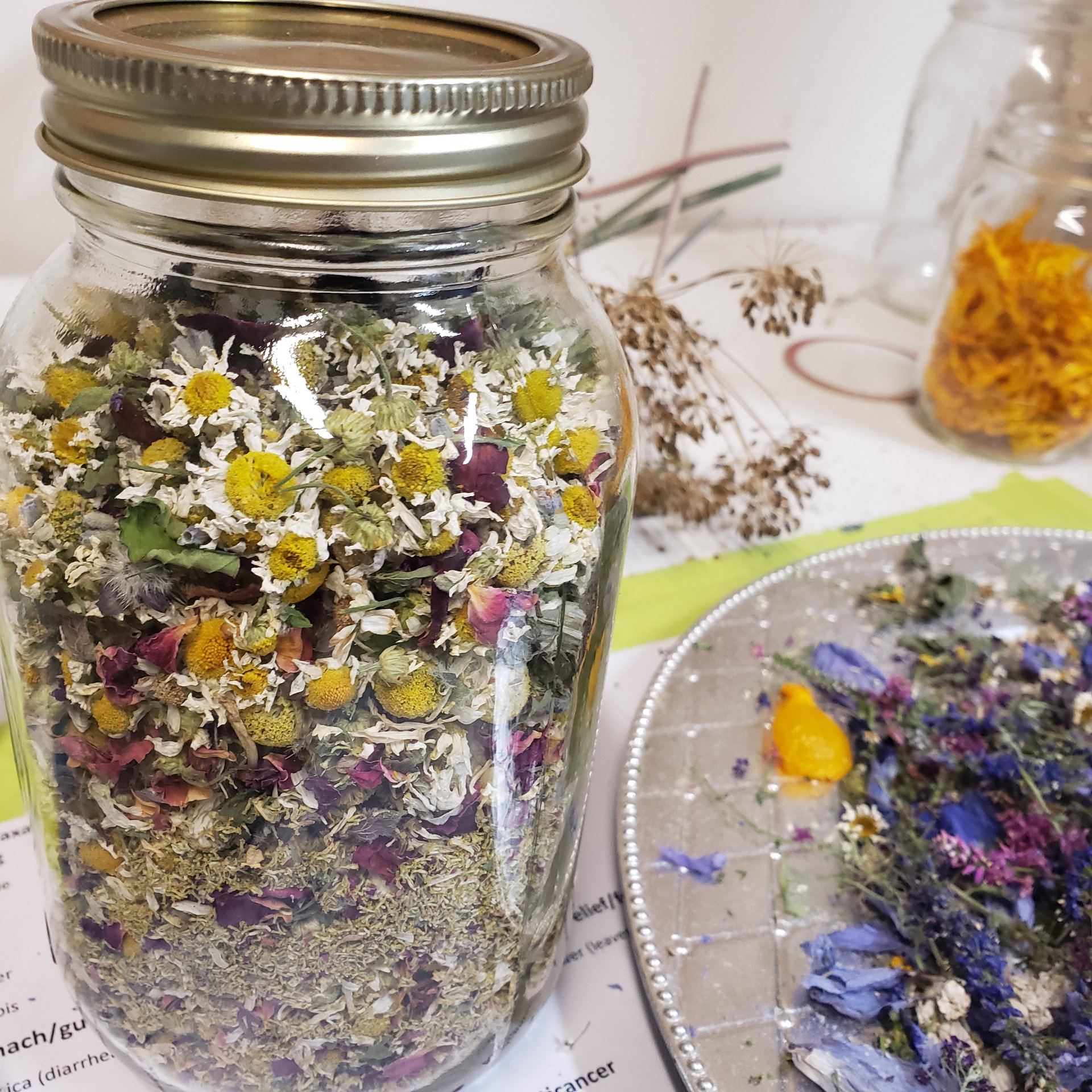
I didn't pivot. We talked, and I told her my personal story of renewed health — of getting off pharmaceuticals. She worked in health care, so no doubt had tried all remedies available to her, so she was keenly interested. We walked through the garden, she looked at the dozens of jars of roots and berries and bark and petals I had on my shelves, and I told her stories.
About the plants in my garden that have been used by humans, traditionally, for millennia, in the context of sleep. About what we know — and what we don't know — about why some of these plants seem to do something useful for some people. About the chemistry that runs underneath those traditions: the volatile oils, the alkaloids, the compounds that pharmacologists have isolated and turned into medicine, and the compounds that they haven't, and the difference between the two. About the fact that aspirin came from willow bark, and digitalis came from foxglove, and morphine came from the opium poppy, and the modern pharmacy is, in many ways, just the catalogued and patented version of knowledge that Indigenous peoples and traditional healers had been carrying for ten thousand years.
I told her, also, about danger. Plants are not gentle. The same chemistry that can settle a nervous system can also stop a heart. The same compounds that can ease pain can also addict or kill. There is no plant that is "safer than medicine" in any blanket sense.
There are plants that, used carefully and with knowledge, are extraordinary. There are plants that, used carelessly, are worse than the pharmaceuticals they're supposed to replace. The line between the two is not where most popular herbal writing wants you to think it is.
She listened. She asked questions. She is a good doctor — meaning, among other things, that she knew how to listen to information that did not arrive in the format of a peer-reviewed trial. She knew how to weigh what she was hearing.
Weeks later she sent me an email saying, "I want to thank you. You have literally changed my life. I have not slept this well in twenty years. I mean it. Thank you!"
That is why, this season, I am offering a class called What Plants Know.
It is not a class about how to treat your conditions with herbs. I will not do that, and you should not want me to. It is a class about how to read a garden — how to see plants the way humans saw them for the ten thousand years before pharmacy existed.
We walk through the garden, and I tell you about the plants. Not as a menu of remedies, but as a story. What this plant has been used for, traditionally. What we know about why. What the modern medicine cabinet quietly took from this plant. What this other plant could kill you with, if you used it carelessly, which is exactly why traditional cultures had elaborate protocols around it. What we are only now beginning to understand about what plants do for each other — the mycorrhizal networks beneath the soil, the chemical conversations between trees, the volatile compounds that a forest releases that lower your cortisol if you stand in it long enough.
It is, in essence, a class about literacy. The same kind of literacy that lets you read a book — except the book is the garden, and it has been writing itself for a very long time, and most of us have forgotten how to open it.
You will not leave the class with a treatment plan. You will leave the class with a different relationship to plants, which is a much more powerful thing.
A small note about why this class exists in this form
I used to teach a more direct version of this class — sit down, talk about specific conditions, work through what plants might be useful for what — and it was a popular class, and it was meaningful work, and it also lived in a legal grey area that I am not interested in living in.
The truth is that a person who walks through a garden and learns to see plants the way I am going to teach you to see them will, over time, become a better self-advocate in their own healthcare than any single class on remedies could ever make them. They will start asking better questions. They will start reading research papers with a less credulous eye. They will start noticing what their own body responds to. They will, in short, become an informed person — which is, in my honest opinion, the only durable form of health literacy there is.
That is what I am offering. Not treatment. Not advice. Literacy.
The practical bits
What Plants Know runs $75–$85 per person. Two and a half to three hours. Garden walk, conversation, hands-on observation, samples to smell and touch. No tinctures, no recipes, no medical advice. Just the stories the plants have to tell, for those who are ready to listen.
The class is offered in summer and early fall, when the garden is doing its work and the air is full of the chemistry it shares.
An important note for participants: This is an educational class about plants and their cultural and historical uses. It is not a substitute for medical care, and nothing in the class should be interpreted as medical advice. Always consult your healthcare provider before making decisions about your health.