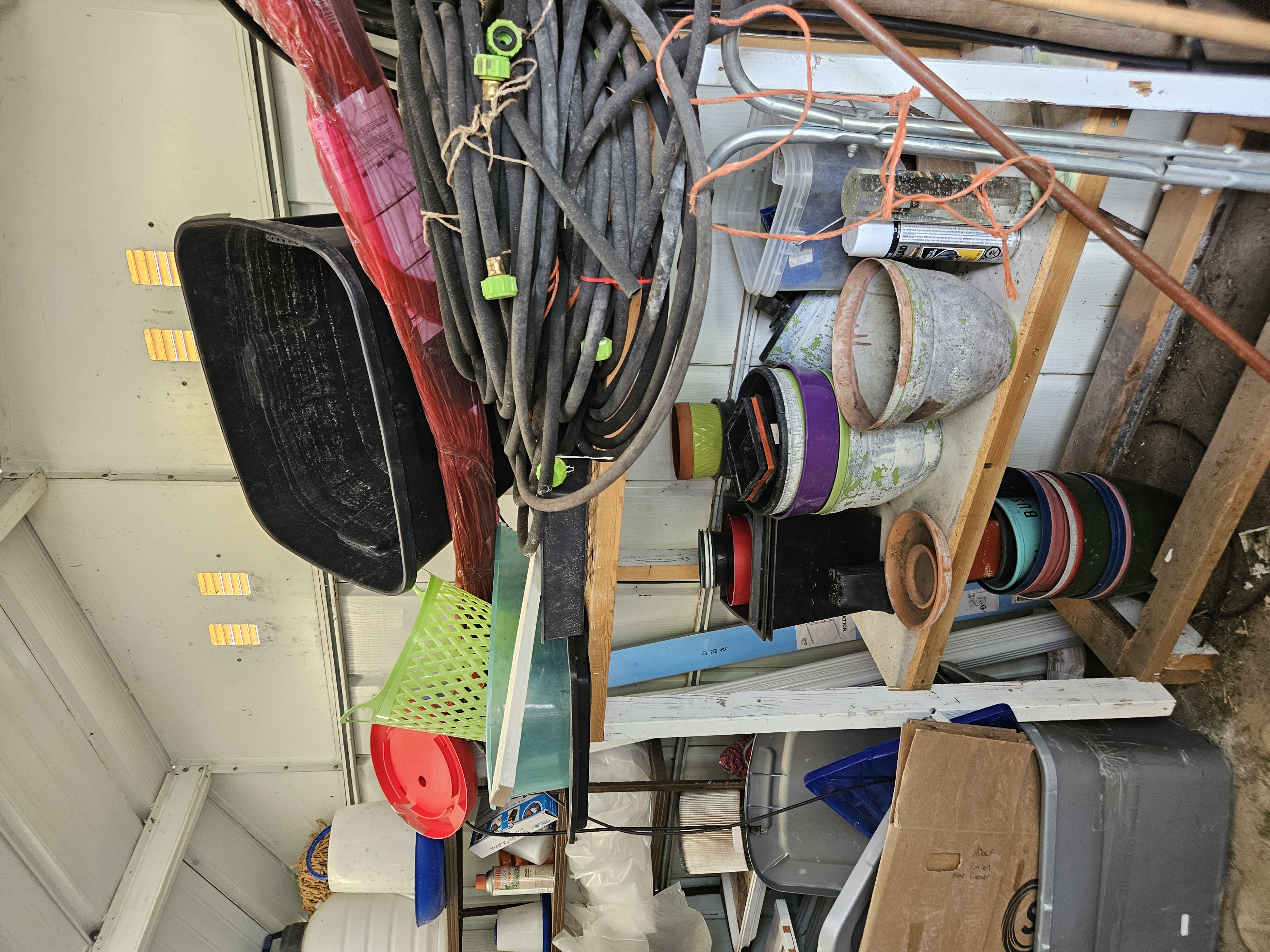
By May, the door wouldn’t open.
Not all the way — just enough to wedge myself in sideways, climb over the mountain of I’ll-deal-with-it-later that had built itself up over the summer, fall, and winter, and locate whatever it was I needed. A trowel. A length of rope. The hose attachment I knew was in there somewhere because where else would it be.
Twenty minutes. Every time. For a thing that should take two.
This is the annual deal I make with my shed. Every spring, I clean it out — drag everything onto the lawn, sweep, organize, put it back like a person who has her life together. And every spring, I make myself the same earnest promise: this year I’ll keep it nice. This year I’ll put things back where they belong. This year will be different.
It is never different.
By June I’m in the middle of planting and I drop the rake by the door because I’ll put it away after lunch. By July there’s a tomato cage propped against the wheelbarrow because I’ll deal with that tomorrow. By August the path to the back corner has disappeared. By winter the door doesn’t close properly because something has fallen against it from the inside, and I swear I can hear it laughing at me when the wind blows.
This year was worse, because this spring I’ve been sick.
A month of it, right in the middle of the busiest stretch — planting, drying herbs, the B&B opening, the demonstration garden coming alive at the exact pace it always does, indifferent to whether I’m well enough to keep up with it.
The shed sat there the whole time, getting worse, and I couldn’t face it. Every time I climbed in sideways and came out scratched, I thought: I need to deal with this. And then I lay down because I was too nauseous to deal with anything.
Then Leanne showed up.
She came over, walked into the shed, took one look at the mountain, and said let’s go. Four hours later we had everything out on the lawn, swept, sorted, and put back. Tools on hooks. Pots stacked. The hose attachment where I will be able to find it next time — and then her husband Rod hauled away a truck load of stuff to the dump.
There was now so much space in the shed I could hold a dinner party in there!
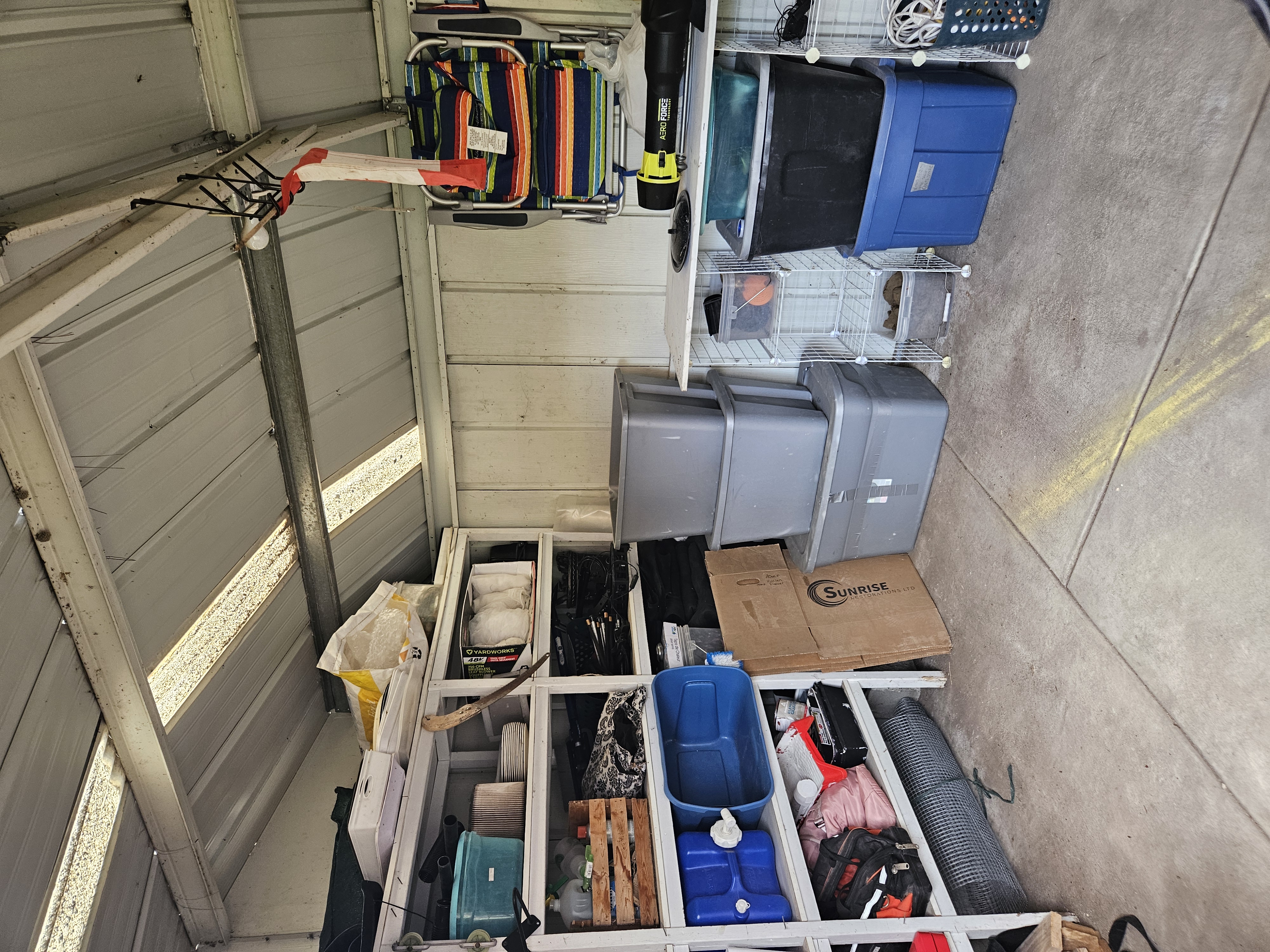
Four hours of work. Leanne, Rod, and one very relieved shed owner.
I hugged her and I started to cry. Big, embarrassing, no-warning tears. The kind you don’t see coming until they’ve already arrived.
Because here’s what I hadn’t quite let myself feel until that moment: I couldn’t have done it alone. Not this time. Not this month. And the shed wasn’t just the shed — it was the thing I’d been avoiding because every time I looked at it, I had to look at the fact that I wasn’t well enough to handle my own life.
This story isn’t just about the shed. The shed is a metaphor.
You build a system that works. The busy season eats your good intentions. By the time you notice, the door doesn’t open. This is the shape of depleted soil, and the shape of a body run too hard for too long, and the shape — if I’m being honest — of every extraction loop I’ve ever named in this work. You promise yourself you’ll tend it. The acceleration eats the promise. By winter you can’t get in.
Normally I can dig myself out of the shed alone — but there is always a cost to doing that. This year, I had no choice, and that is what community is for.
Not the performance of it. Not Friday-night-drinks community. The kind where somebody walks into your shed without being asked and says let’s go.
I’ll make the promise again this year. I’ll keep it nice. I’ll put things back where they belong. This year will be different.
I may be kidding myself — it probably won’t — but the door opens now. And next time it doesn’t, I know who to call.